When discussing drinking water infrastructure, attention often focuses on supply capacity, treatment quality, and distribution efficiency. However, there is an equally important factor that is often overlooked: the materials that come into contact with water throughout the entire system.
Pipes, valves, fittings, tanks, pumps, and coatings are all part of a complex network designed to transport water from the source to the end user safely. If any of these components release substances that compromise water quality, the risk affects not only the infrastructure but also people’s health.
For this reason, international standards exist to evaluate the safety of materials used in drinking water systems. Among them, one of the most widely recognized is the NSF/ANSI 61 standard.
This certification has become a benchmark for manufacturers, operating agencies, engineering firms, and specifiers seeking to ensure that materials in contact with drinking water meet strict safety criteria.
What Is the NSF/ANSI 61 Standard?
The NSF/ANSI/CAN 61 standard was developed to evaluate the potential health effects of materials, components, and products that come into contact with water intended for human consumption.
Its primary purpose is to verify that these materials do not release contaminants at concentrations that pose a health risk.
In simple terms, the standard seeks to answer a fundamental question:
Can the material in contact with drinking water alter its quality or introduce potentially harmful substances?
To answer this, products undergo specific tests and evaluations to determine whether they comply with the established limits for various chemicals.
Why Is This Certification Important?
Water quality does not depend solely on its source or treatment.
Even when water leaves a water treatment plant meeting all required parameters, it must still travel kilometers through infrastructure before reaching consumers.
During that journey, it comes into contact with multiple surfaces and materials.
If any of these are unsuitable for drinking water applications, it can lead to problems such as:
- Alteration of water quality.
- Migration of chemicals.
- Increased levels of contaminants.
- Regulatory risks.
- Additional maintenance or replacement costs.
For this reason, an increasing number of projects consider NSF/ANSI 61 certification a fundamental requirement for material selection.
Beyond Piping
There is a perception that this standard applies only to pipes. However, its scope is much broader.
Depending on the application, components such as the following may be subject to evaluation:
- Pipes.
- Valves.
- Fittings.
- Storage tanks.
- Pumping equipment.
- Filtration systems.
- Mechanical components.
- Coatings used in contact with drinking water.
This makes the certification an important benchmark for many industries related to water infrastructure.
The Importance of Coatings in Drinking Water Systems
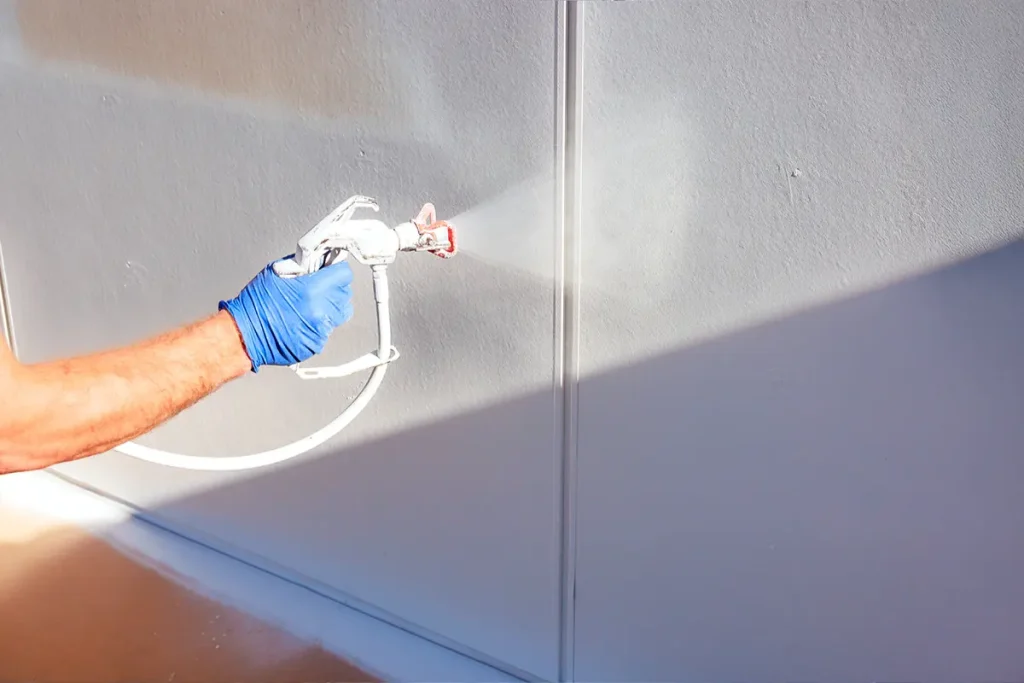
One of the least visible, yet most significant, aspects is the role of industrial coatings.
Metal surfaces used in hydraulic systems require corrosion protection to maintain their structural integrity and extend their service life.
However, in drinking water applications, durability alone is not enough for a coating. It must also be proven that it will not affect the quality of the water with which it comes into contact.
For this reason, water infrastructure projects often require systems specifically designed for such applications.
Corrosion protection and public health safety must work hand in hand.
Corrosion: An Ongoing Challenge in Water Infrastructure
Water systems are exposed to conditions that can cause materials to deteriorate over time.
Factors such as:
- Constant humidity.
- Temperature fluctuations.
- Environmental conditions.
- Service life.
- Chemical exposure.
These factors can accelerate corrosion processes if adequate protection is not in place.
Corrosion can cause significant problems such as:
- Thickness loss in pipes.
- Leaks.
- Increased maintenance costs.
- Reduced service life.
- Operational disruptions.
Therefore, the selection of materials and protection systems is a strategic decision that must be made from the earliest stages of the project.
Who Uses the NSF/ANSI 61 Standard?
Certification is widely considered in projects related to:
Municipal Infrastructure
Water utilities and drinking water systems typically use certified materials to ensure the safety of their networks.
Water Treatment Plants
Equipment and components used in water treatment processes may be required to comply with specific standards.
Engineering and Construction
Engineering and specification firms use the standard as a reference for product selection.
Industry
Many industrial facilities have internal drinking water systems, in which water quality must also be monitored.
Benefits of Using Certified Materials
Adopting materials and systems evaluated according to recognized standards can yield multiple benefits.
Greater Technical Confidence
Certification provides objective evidence of the product’s performance when in contact with drinking water.
Compliance with Specifications
Many public and private projects incorporate regulatory requirements into their bidding and construction processes.
Protection of Water Quality
It helps minimize the risks of substance migration from materials.
Reduction of Operational Risks
Making the right selection from the outset helps prevent future problems arising from replacements or non-compliance.
The Importance of Correct Specification
One of the most common causes of problems in water projects is not necessarily product quality but rather inadequate specifications.
Selecting materials based solely on their initial cost can have significant consequences over the infrastructure’s service life.
Therefore, the technical evaluation must consider aspects such as:
- Operating conditions.
- Regulatory requirements.
- Material compatibility.
- Expected durability.
- Maintenance needs.
A comprehensive analysis enables more informed and sustainable long-term decisions.
Trends in Water Infrastructure
As regulatory requirements and quality expectations grow, the water industry continues to evolve.
Today, there is a greater focus on:
- High-performance materials.
- Specialized anti-corrosion systems.
- More durable infrastructure.
- Life-cycle cost optimization.
- Regulatory compliance.
The trend is toward solutions that not only protect assets but also help preserve water quality throughout the system’s entire service life.
A Standard That Inspires Confidence
The NSF/ANSI 61 standard has established itself as a key benchmark for evaluating materials and components intended to come into contact with drinking water.
More than just a technical requirement, it serves as a tool for promoting best practices in the design, construction, and operation of water infrastructure.
Water quality depends on multiple factors, and the proper selection of materials is an essential part of that equation.
Considering recognized standards from the earliest stages of a project can significantly contribute to the safety, durability, and reliability of drinking water systems.
At DQ Coatings, we understand the importance of developing solutions focused on performance, protection, and the specific requirements of each industrial application. The proper selection of a coating system is a fundamental step in protecting assets and supporting long-term operation.
Do you need technical advice for a water infrastructure or drinking water systems project? Our team can assist you in selecting coating solutions that meet your requirements.