In modern industry, durability, efficiency, and finish quality are key factors for the protection and performance of various metal components. In this context, electrostatic painting—also known as powder coating—has become one of the most widely used technologies in industrial sectors that require durability, uniformity, and productivity.
Currently, industries such as automotive, manufacturing, construction, HVAC, metal furniture, and electrical applications use powder coating systems because of their ability to produce consistent, high-performance industrial finishes.
In addition to improving surface appearance, this type of coating helps protect materials against wear, abrasion, and harsh environmental conditions.
What Is Electrostatic Painting?
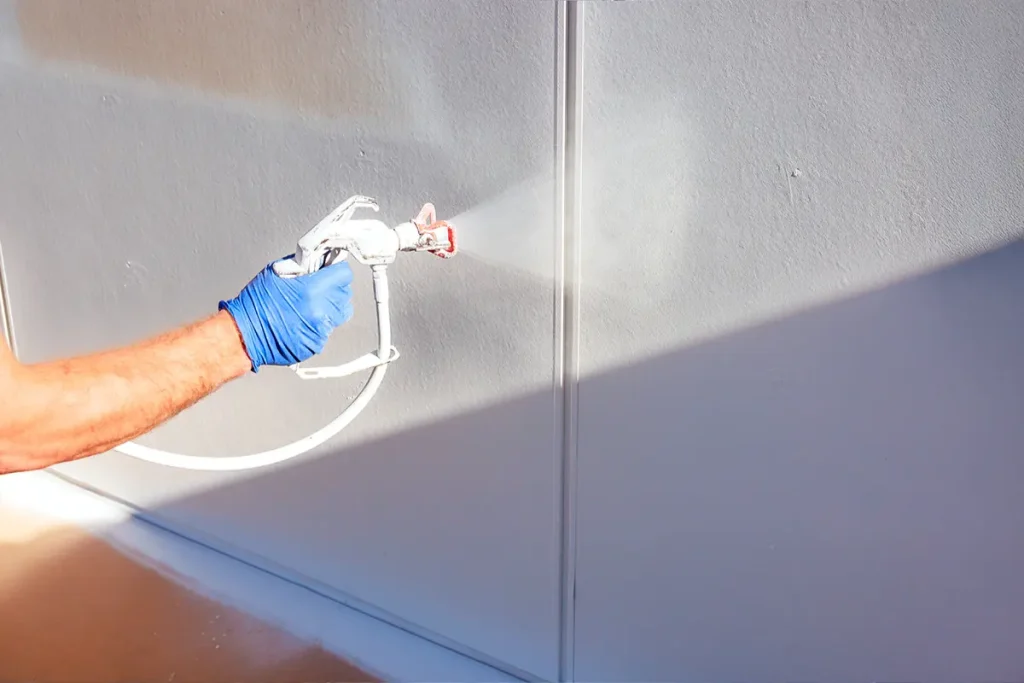
Electrostatic painting is a powder coating application process in which electrically charged particles are deposited onto a metal surface and then thermally cured.
During application, the powder adheres evenly thanks to the electrostatic charge generated between the material and the surface.
The parts are then passed through an oven where the coating melts and forms a solid, durable film.
Unlike many conventional liquid systems, powder coating does not require solvents during application, enabling highly uniform finishes and efficient industrial production.
Why Is Powder Coating So Widely Used in Industry?
The growth of powder coating is due to a combination of technical performance, operational efficiency, and aesthetic quality.
In high-volume industrial processes, this technology ensures consistency across parts and optimizes production times.
Additionally, it can be adapted to various types of applications and industrial requirements.
Uniform and Consistent Finishes
One of the main benefits of electrostatic painting is the uniformity of the finish.
Electrostatic application ensures even surface coverage, reducing visible variations between parts and improving the visual quality of the finished product.
This is especially important in industries where appearance and consistency are part of the quality standard.
High Mechanical Strength
Powder coatings offer excellent resistance to:
- Abrasion.
- Impact.
- Scratches.
- Surface wear.
This helps extend the service life of metal components subjected to constant use or demanding industrial environments.
For this reason, powder coating is widely used on metal furniture, household appliances, electrical cabinets, and industrial components.
Excellent Performance in Mass Production
Electrostatic painting is highly efficient for continuous production lines. Its operational advantages include:
- Fast application.
- Uniform coverage.
- Consistency between batches.
- High repeatability.
- Efficient integration into automated processes.
This ensures productivity and quality control in high-volume industrial applications.
Wide Variety of Industrial Finishes
Powder coating enables the creation of various finishes to meet the project’s needs.
These include:
- Textured.
- Smooth.
- Matte.
- Glossy.
- Satin.
- Metallic.
This allows for a combination of technical performance and aesthetic appeal in industrial and architectural applications.
Most Common Industrial Applications
Electrostatic paint is used in many industrial sectors due to its versatility and performance.
Automotive
In the automotive industry, powder coating is used on components that require mechanical strength and consistent finishes.
It can be applied to:
- Wheels.
- Metal components.
- Structures.
- Interior and exterior parts.
Construction and Architecture
In architectural and construction applications, powder coatings help protect metal structures exposed to the elements.
In addition to protection, they provide durable and uniform finishes for visible elements.
Electrical Applications
Enclosures, electrical components, and metal structures used in electrical systems require durable and reliable finishes.
Electrostatic painting allows for the creation of uniform surfaces with good mechanical strength and industrial performance.
HVAC
In HVAC systems, powder coating is used to protect metal components and maintain durable finishes under varying operating conditions.
Home Appliances
Many household appliances incorporate powder coatings due to their surface durability and uniform appearance.
This helps maintain aesthetic quality and durability during everyday use.
Metal Furniture
The combination of aesthetics and durability makes powder coating a widely used solution for industrial, commercial, and urban furniture.
Differences Between Powder Coatings and Liquid Paints
Although both systems can be used for industrial protection, there are significant differences between powder coating and liquid systems.
| Powder Coating | Liquid Coating |
| Electrostatic application | Traditional liquid application |
| Thermal curing | Drying or curing depending on the system |
| Excellent uniformity | Greater application flexibility |
| High production efficiency | Ideal for specialized anti-corrosion systems |
| Widely used in manufacturing | Widely used in industrial infrastructure |
The appropriate selection depends on the environment, surface type, and the project’s technical requirements.
Important Factors to Consider Before Selecting a System
Choosing a coating system requires evaluating various operational and technical factors.
Type of Application
Not all systems perform the same for decorative components, exterior structures, or harsh environments.
Operating Environment
Humidity, UV exposure, abrasion, and chemicals directly influence the system’s performance.
Aesthetic Requirements
In many industries, the visual finish is just as important as functional protection.
Production and Volume
In automated or high-volume production lines, powder coating can offer significant advantages in terms of productivity and consistency.
The Importance of Proper Application
The performance of electrostatic painting does not depend solely on the product used. It is also essential to consider:
- Surface preparation.
- Proper cleaning.
- Application parameters.
- Proper curing.
- Quality control.
Improper application can affect the system’s adhesion, appearance, and durability.
Therefore, the selection of the system and the application process must be evaluated comprehensively.
Technology Focused on Performance and Durability
Electrostatic painting and powder coatings remain among the most efficient solutions for a wide range of industrial applications, thanks to their durability, uniformity, and operational performance.
The correct selection of the system can directly impact the product’s durability, production efficiency, and final finish quality.
At DQ Coatings, we develop industrial powder coating solutions for applications that require reliable performance, protection, and consistent finishes across various sectors.